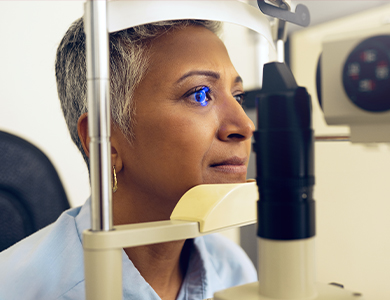

555 Fairmount Ave
Jamestown, NY 14701

What Does a Comprehensive Eye Exam Include?

A comprehensive eye exam does much more than check whether you need glasses. It gives us a clear view of your vision and your overall eye health. At Spectrum Eyecare, we use comprehensive eye exams to detect changes in prescription, evaluate how your eyes work together, and look for early signs of eye disease before symptoms become obvious.
Medical History and Symptom Review
Your visit usually begins with a conversation about your health history, medications, vision changes, and any symptoms you have noticed. Conditions such as diabetes, high blood pressure, and autoimmune disorders can affect the eyes, so this information helps guide the exam. We also ask about headaches, dryness, blurred vision, floaters, and trouble seeing at night.
Visual Acuity and Refraction Testing
Next, we measure how clearly you see at different distances. This part of the eye exam includes the familiar letter chart, along with refraction testing to determine whether you need glasses or contact lenses. If you already wear corrective lenses, we evaluate whether your current prescription is still working well for your daily needs.
How Your Eyes Function Together
A comprehensive eye exam also checks how your eyes move, focus, and work as a team. We may evaluate eye alignment, depth perception, peripheral vision, and how your pupils respond to light. These tests can help identify issues that may affect reading comfort, screen use, driving, or overall visual performance.
Eye Health Evaluation
This part of the exam focuses on the structures of the eye. We examine the cornea, lens, retina, optic nerve, and other internal and external areas for signs of concern. Depending on your needs, this may include dilation so we can get a wider view of the back of the eye and look more closely for conditions such as glaucoma, macular degeneration, cataracts, and diabetic eye disease.
Common Components of a Comprehensive Eye Exam
- Review of medical history and vision concerns
- Visual acuity testing
- Refraction for glasses or contact lens prescription
- Eye movement and focusing evaluation
- Peripheral vision testing
- Eye pressure measurement
- Retinal and optic nerve evaluation
- Dilation when clinically needed
Protect Your Vision with Routine Eye Care
Many eye diseases develop gradually and may not cause noticeable symptoms in the early stages. A comprehensive eye exam helps us catch problems early, when treatment is often most effective. It also allows us to monitor subtle changes over time and recommend the right care for your age, lifestyle, and health history. Whether you have noticed vision changes or it is simply time for your routine visit, regular eye exams are one of the best ways to protect your long-term eye health.
Take the next step in protecting your vision by scheduling a comprehensive eye exam at Spectrum Eyecare. Visit our office in Jamestown, NY, or call (716) 664-7601 to book an appointment today.
Office hours
- Monday 8:00am - 6:00pm
- Tuesday 8:00am - 6:00pm
- Wednesday 8:00am - 6:00pm
- Thursday 8:00am - 6:00pm
- Friday 8:00am - 6:00pm
- Saturday 8:00am - 1:00pm*
- Sunday Closed
- *Open every other Saturday

Powered by
